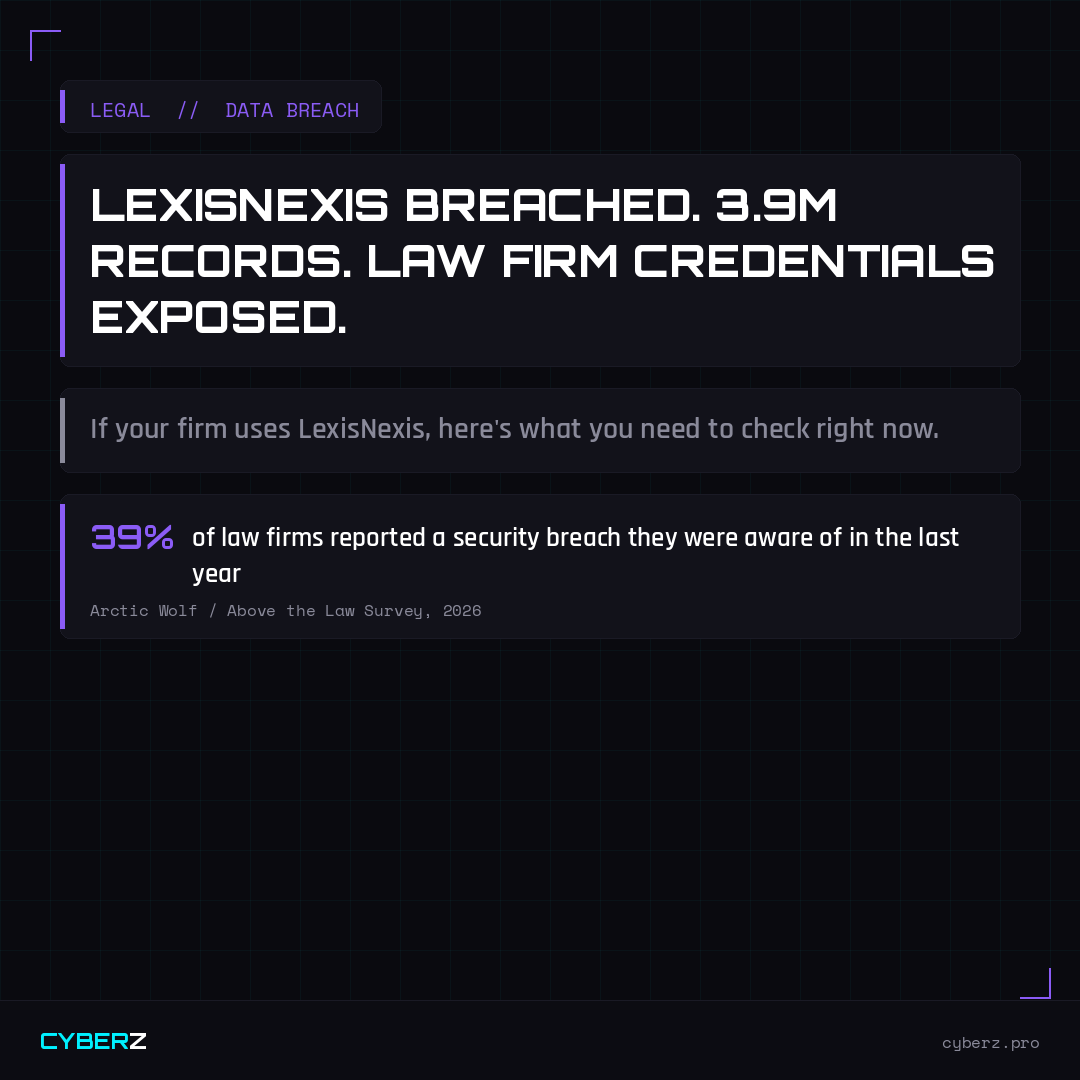
LexisNexis Breached. 3.9 Million Records Exposed. Law Firm Credentials Leaked.
In early March 2026, a threat actor posted 3.9 million internal records allegedly stolen from LexisNexis’s AWS infrastructure — including plaintext login credentials and profile data tied to roughly 400,000 users.
Among the exposed accounts: federal judges, law clerks, DOJ attorneys, SEC staff, and thousands of law firm users.
The attacker — a group called FulcrumSec — claimed to have found the password “Lexis1234” reused five different times across internal systems. Their message to the legal industry was blunt: the company that indexes the world’s legal information couldn’t secure its own access controls.
LexisNexis confirmed the breach was real, said it involved “mostly legacy, deprecated data,” and stated the matter was contained. But the downstream risk for law firms is significant.
Why This Matters for Your Firm
Stolen law firm credentials don’t just open LexisNexis accounts. They open everything.
Attorneys reuse passwords. The same login used for a legal research platform is often the same login used for email, client portals, document management, and billing systems. Credential stuffing — where attackers take stolen username/password pairs and try them across every major platform — is automated, fast, and ruthlessly effective.
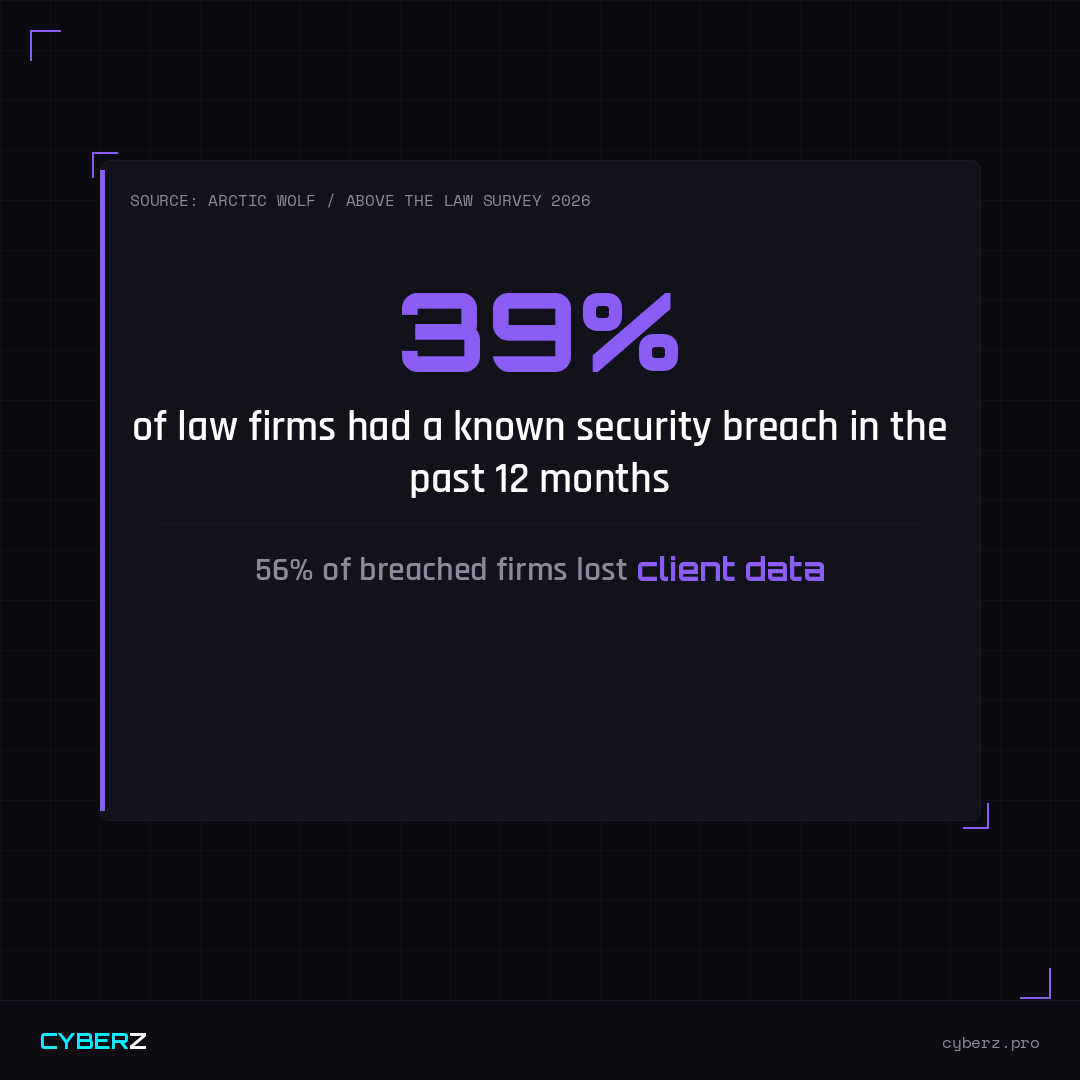
According to a recent survey by Arctic Wolf and Above the Law, 39% of law firms reported a security breach they were aware of in the last year. Of those, 56% lost confidential client data.
The Legal Industry Is a Prime Target
Law firms hold concentrated, high-value data: M&A details before they’re public, litigation strategy, client financial records, settlement amounts, and privileged communications. That data is worth significant money — both to competitors and to ransomware operators who know firms can’t afford to have case files locked.
This year alone: Fried Frank was breached (triggering breach notices from both JPMorgan Chase and Goldman Sachs), Williams & Connolly was targeted by Chinese state-sponsored hackers via a zero-day vulnerability, and LexisNexis lost millions of records tied to the legal industry’s most sensitive users.
This is not a big-firm-only problem. Small and mid-size practices are often easier targets with the same valuable data.
What to Do Right Now
If your firm uses LexisNexis:
- Change your LexisNexis password immediately — assume your credentials were in the breach
- Check every account that shares that password and change those too
- Enable MFA on LexisNexis and every other platform your firm uses
- Alert staff — send a firm-wide notice today about credential hygiene
Beyond LexisNexis, this breach is a good forcing function for a broader security review.
// LAW FIRM BREACH RESPONSE CHECKLIST
- Rotate passwords on all legal research, document management, and client portal accounts immediately
- Enable MFA on every account that supports it — email, practice management software, court filing systems
- Audit who has access to client files — remove access for departed staff and unused accounts
- Check your cyber insurance policy — confirm it covers third-party vendor breaches
- Review your ABA Rule 1.6 obligations around competent protection of client data
- Train staff on credential stuffing and phishing — especially following a high-profile breach
Your ABA Obligations
Under ABA Rule 1.6, lawyers have a duty to prevent unauthorized disclosure of client information. This includes taking reasonable measures to protect against data breaches — which courts and bar associations increasingly interpret to include basic security hygiene like MFA and password management.
A breach that exposes client data isn’t just a security problem. It’s a professional responsibility problem.
Legal Security Bundle
20+ security documents built for law firms — wire fraud prevention, BEC defense, client data protection policies, incident response plans, and ABA-aligned security frameworks.
View Bundle →Originally reported by LawSites / The Record for LawSites / The Record on March 2026.