Scammers Are Cloning Your Kid's Voice With 3 Seconds of Audio. Here's How to Protect Your Family.
The call comes on a Tuesday afternoon.
You hear your child’s voice — crying, scared, saying they’ve been taken. A second voice comes on, demanding money. Don’t call the police. Transfer it now.
It sounds exactly like your kid. Because it is your kid’s voice.
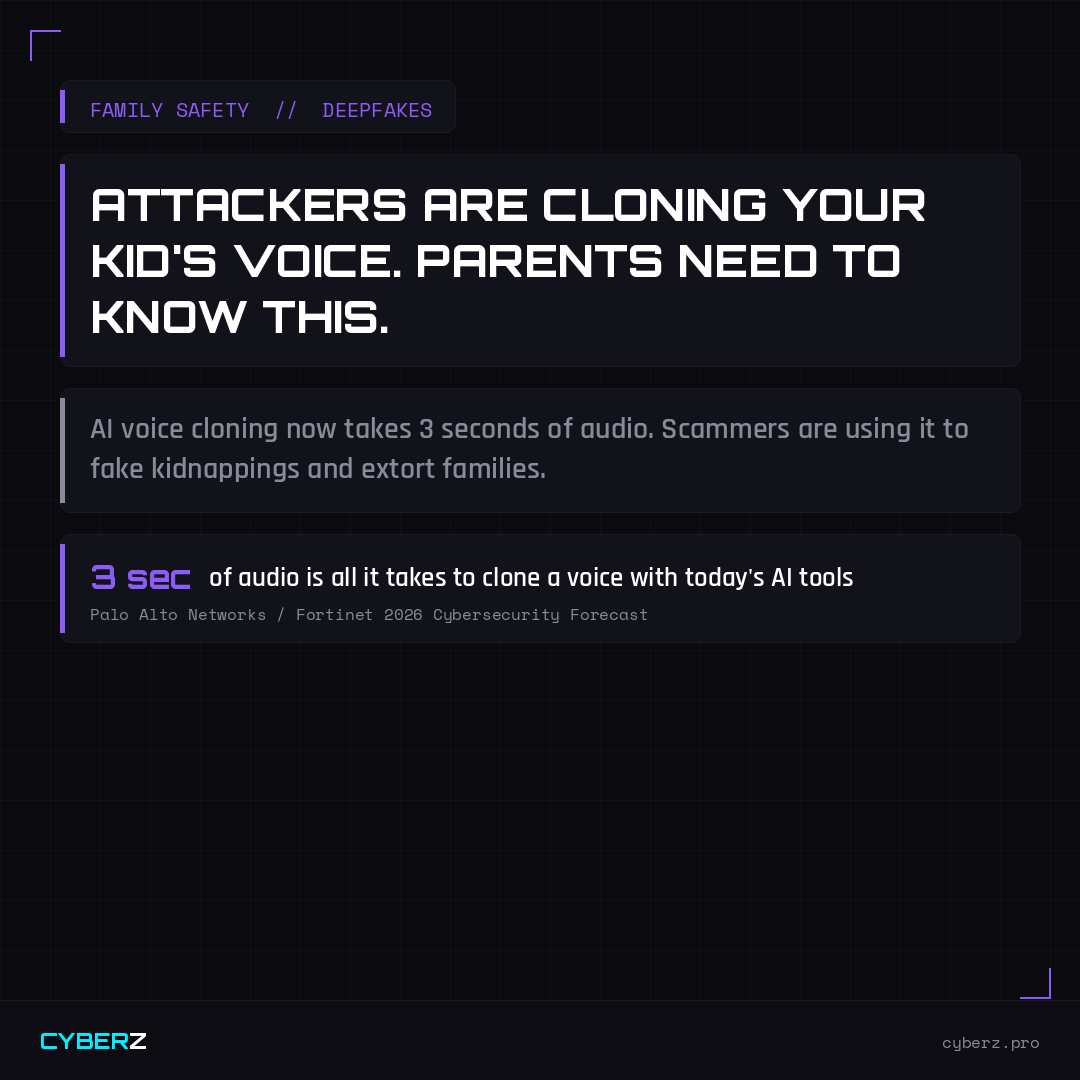
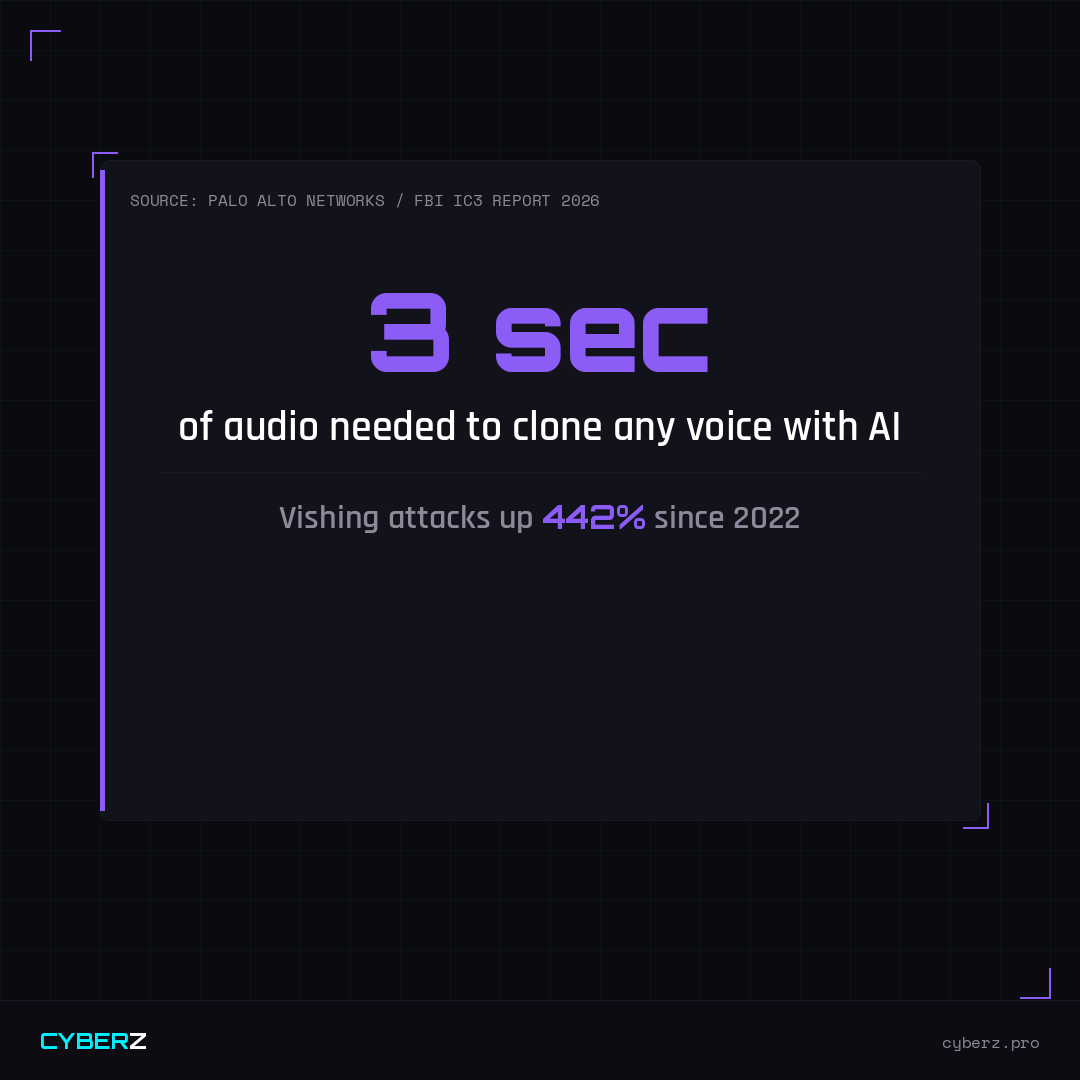
Scammers pulled 3 seconds of audio from a TikTok post, ran it through an AI voice cloning tool, and generated a fake emergency in real time. This scam — called a “virtual kidnapping” — is growing rapidly as AI voice tools become faster, cheaper, and more accessible.
How It Works
Three years ago, convincing voice cloning required significant technical skill and hours of audio samples. Today, multiple consumer-grade AI tools can clone a voice from a clip shorter than a TikTok. The output is good enough to fool parents, especially under stress.
The typical attack flow:
- Scammer finds your child’s social media profile (public accounts are easy targets)
- They extract 3-10 seconds of audio — a laugh, a sentence, a clip from a video
- They run it through an AI voice cloning tool
- They call you, play the cloned voice in distress, and hand off to a “captor” demanding immediate payment
- They tell you not to hang up — keeping you on the line prevents you from calling your child back
The FBI and FTC have both issued warnings about this tactic. Vishing attacks — voice-based phishing — have grown dramatically as AI tools have lowered the barrier to entry.
Why Kids Are Especially Vulnerable
Teenagers post constantly. Public profiles on TikTok, Instagram, and YouTube contain hundreds of hours of voice audio, facial data, and personal information — school name, hometown, friends’ names, daily routines.
That data is publicly available to anyone with a browser. An attacker doesn’t need to hack anything. They just need to watch.
Beyond voice cloning, AI can also:
Generate deepfake images and videos — realistic fake photos of your child in compromising or dangerous situations, used for sextortion or harassment.
Create convincing fake profiles — using real photos scraped from public accounts to impersonate your child to their friends or to you.
Synthesize AI predator personas — building long-term fake relationships with children through AI-assisted messaging, as documented in FBI investigations.
What Families Can Do Right Now
// FAMILY DEEPFAKE PROTECTION CHECKLIST
- Set all your child's social media accounts to private — this removes publicly accessible audio and video
- Create a family safe word — a code word only your family knows, used to verify real emergencies
- If you receive a distress call, hang up and call your child directly — even if the caller tells you not to
- Talk to your kids about what they share publicly — voice, location, school name, and daily routine are all data
- Search your child's name on major platforms to see what's publicly visible
- Enable "Who can see my content" restrictions on TikTok, Instagram, and YouTube
- Review location-sharing settings on all apps — many share location by default
The Safe Word Conversation
The single most practical defense against virtual kidnapping is a family safe word. It’s a word or phrase that only your family members know — something that can’t be guessed from social media.
If you receive an emergency call and can’t immediately reach your child, ask the caller for the safe word. A scammer won’t know it. A real family member will.
Have this conversation with your kids today. It takes five minutes and could prevent a moment of panic from turning into a wire transfer.
Raising Safe Kids in a Deepfake World
Our Amazon book covers AI threats targeting children and families — deepfakes, voice cloning, AI predators, and practical steps parents can take today.
View on Amazon →